
Henry — Head of Marketing · Reviewed by Austin, Product Manager
July 9, 2026 · 9 min read
Choose PE if your only scoreboard is unit price. Choose PLA if your customers, your market’s regulations, or your brand promises require a compostable cup, and budget an extra 8 to 15% per cup for it. That’s the decision in two sentences; the rest of this guide is the evidence, the cost math, and the paperwork you’ll need for whichever way you go.
If you want the coating chemistry in detail (including the third option, aqueous), read our three-way coating comparison. This article is about making the call as a buyer.
What’s actually different between PLA and PE cups?
Physically, almost nothing you’d notice. Both are paperboard cups with a thin waterproof layer on the inside. The difference is what that layer is made of and what happens after the bin:
- PE (polyethylene) is a fossil-fuel plastic film. It’s the cheapest barrier, it handles hot and cold drinks without complaint, and every cup factory on earth runs it. End of life: not compostable, and not recyclable in most municipal paper streams.
- PLA (polylactic acid) is a bioplastic made from plant starch (corn or sugarcane). In hand it looks and feels identical to PE. End of life: industrially compostable when certified to EN 13432 (EU) or ASTM D6400 (US): the cup and the coffee grounds go in the same commercial compost bin.
One number that surprises buyers: heat. Standard PLA softens above 55°C. For iced drinks and cold cups this is irrelevant: it’s why our PLA compostable cold cups are a straightforward swap. For hot-drink programs, factories use heat-stabilized configurations (CPLA lids, adjusted specs); it works fine, but it’s a conversation to have explicitly with your supplier, not an assumption.
The cost math, honestly
PLA resin costs more than PE, and the premium lands at roughly 8 to 15% on the finished cup, moving with order volume and resin markets. Here’s how to think about whether that premium pays for itself:
- Regulatory access. Several EU member states restrict or tax plastic-lined single-use cups, and the list grows yearly. If PE cups trigger a per-unit levy in your market (or get banned from events and venues), PLA’s premium is cheaper than the alternative.
- Contract eligibility. Universities, stadiums, festivals, and corporate campuses with zero-waste targets increasingly require certified compostable serviceware in their tenders. A PE cup doesn’t get you into the bid.
- Price positioning. A café charging premium prices for ethically-sourced coffee undermines itself with a plastic-lined cup. Whether that’s worth 8 to 15% is a brand decision, not a factory one, but your customers have opinions.
- Where it’s wasted: if your market has no industrial composting collection, a PLA cup ends up in the same landfill as a PE cup, and the premium buys you a marketing line only. Be honest with yourself about this one.
What suppliers don’t always volunteer: MOQ differs by line. Our PE-coated paper cups start at 20,000 pcs per size; PLA compostable cold cups run at 30,000 pcs per size. If you’re a smaller operation testing the waters, ask about stock programs before committing to a full custom run.
The compliance paperwork that actually matters
“Eco-friendly” on a listing page is not a compliance document. If you buy PLA to make compostability claims, collect these before production. A legitimate factory produces them on request:
- EN 13432 (EU) or ASTM D6400 (US) certification for the finished cup, issued via certifiers like DIN CERTCO. The certificate should cover the cup as sold, not just the raw resin.
- FDA or LFGB food-contact documentation: required regardless of coating; compostable doesn’t exempt you from food safety.
- Coating specification in writing: confirming PLA lamination and, for hot programs, the heat-stability configuration.
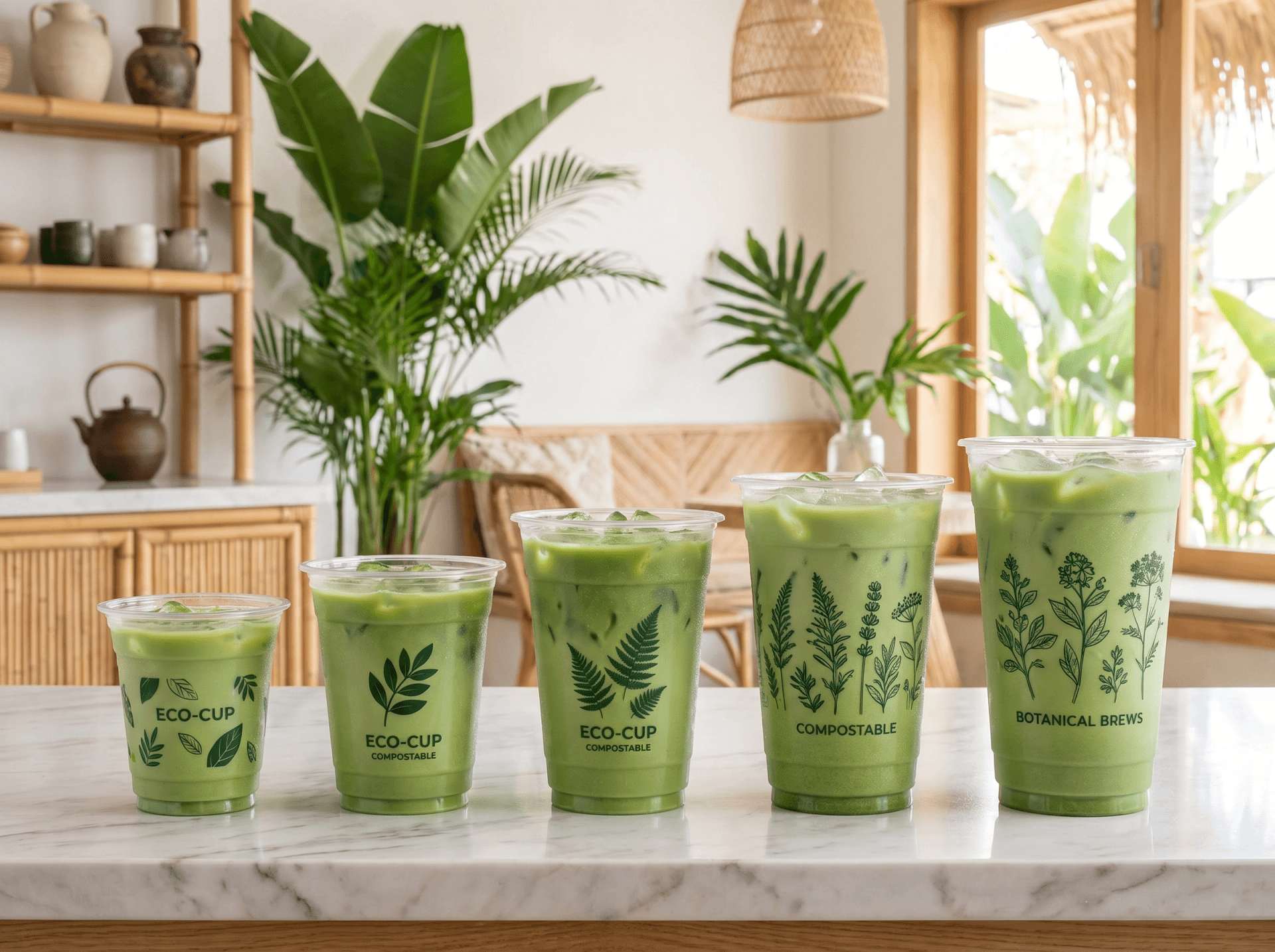
Our EN 13432 explainer covers what “compostable” legally means and how to read the certificates, worth ten minutes before your first PLA order, because regulators and retail auditors read them closely.
For PE cups the paperwork is shorter (food-contact compliance and material specs), but one warning applies to both: if a quote is 20% below market, the savings came from somewhere. Check paperboard GSM, confirm the coating spec, and ask for certificates early. Vague answers on paperwork are how weak suppliers reveal themselves.
Which markets reward which cup
| Your market | Realistic choice | Why |
|---|---|---|
| Germany, Netherlands, Nordics | PLA (or aqueous) | Strict single-use plastic rules; consumers audit claims |
| UK, France | PLA gaining fast | Plastic taxes and procurement standards tightening |
| Australia / New Zealand | PLA | State-level plastic bans explicitly carve out certified compostables |
| US: CA, WA, OR, CO + compost cities | PLA competitive | Industrial composting exists; venues and campuses demand it |
| US: most other states | PE still dominant | Little composting infrastructure; PLA premium is optics only |
| Middle East, Southeast Asia | PE (aqueous rising) | Cost-driven; composting collection rare |
Two nuances the table can’t hold: first, delivery-heavy brands should check what their aggregator platforms require: several now score restaurants on packaging. Second, if your goal is getting the plastic film out rather than a compostable claim, PLA isn’t the answer at all: it’s still a polymer film. That’s aqueous coating’s territory, though aqueous is low-plastic rather than plastic-free.
Switching from PE to PLA: what changes and what doesn’t
What doesn’t change: cup sizes and fitment, lid compatibility logic, artwork and printing (PLA board takes the same flexographic printing, up to 7 colors, Pantone matching included, our printing guide applies as-is), lead times (25 to 30 business days after approval), and the ordering process.
What changes:
- Unit cost (+8 to 15%) and MOQ (30,000/size on PLA cold cup lines)
- Lid selection for hot drinks: pair with CPLA lids to keep the whole unit compostable; a PS plastic lid on a PLA cup breaks both the claim and the certification
- On-cup messaging: “industrially compostable, EN 13432” is defensible; a plain “compostable” or “biodegradable” without qualification invites regulatory trouble in the EU and several US states
- Storage discipline: keep PLA stock out of hot warehouses; the same heat sensitivity that limits standard PLA above 55°C applies to a shipping container in summer
The lowest-risk path we recommend to every switching buyer: run a free sample round first (your drinks, your lids, your hold times), then pilot one SKU (usually the highest-visibility cold cup) before converting the full range.
Five mistakes we see when brands switch to PLA
After years of running both lines, the failure patterns repeat. None of them are about the cup itself. They’re about planning:
- Printing “biodegradable” on the cup. Legally risky in the EU and several US states, and technically wrong: PLA is industrially compostable, which is a specific, certifiable claim. Print “Industrially compostable, EN 13432” or print nothing.
- Pairing PLA cups with plastic lids. One PS lid turns your compostable unit back into mixed waste, and composting facilities reject it. Spec CPLA lids in the same order.
- Leaving a pallet in a hot container or warehouse. Standard PLA’s 55°C softening point applies to storage, not just drinks. Summer shipping through hot ports deserves a conversation with your forwarder; a shaded, ventilated warehouse corner solves the rest.
- Ordering a year of stock at once. The 30,000 pcs/size MOQ tempts buyers into 12-month buys to improve unit price. Two problems: storage risk (see #3) and menu changes. Two or three orders a year is usually the better math even at slightly higher unit cost.
- Claiming compostability without collecting the certificate. When a university procurement office or retail auditor asks for the EN 13432 document and the supplier goes quiet, the contract goes with it. Get the paperwork before the deposit, file it where marketing can find it.
Every one of these is avoidable in the ordering conversation, which is exactly when suppliers should be raising them. If yours doesn’t, that tells you something too.
How to run a low-risk pilot
The switching playbook we recommend, refined across hundreds of client conversations:
- Week 1 to 2: Free samples of your exact sizes in both PLA and PE. Run the drinks you actually sell: hottest, coldest, longest-held. Involve the baristas; they’ll find problems a purchasing manager won’t.
- Week 3: Pilot one SKU: usually the 16oz cold cup or your best-selling hot size. One custom-printed PLA run at MOQ, with CPLA lids, while the rest of the range stays PE.
- Month 2 to 3: Watch three numbers: customer comments (social mentions of the cup often jump), operational complaints (lid fit, stacking, dispenser feel), and the true landed cost difference at your reorder volume.
- Then decide on full conversion with data instead of a datasheet, and negotiate the multi-SKU pricing with evidence of committed volume.
Total cost of finding out: one MOQ run and some shipping fees. Total cost of guessing wrong on a full-range conversion: a container of cups your market didn’t need.
Frequently Asked Questions
Are PLA cups really compostable at home?
No, standard PLA requires industrial composting conditions (sustained heat and humidity). Certified cups break down in commercial facilities alongside food waste. In a backyard compost bin or landfill, they behave much like ordinary plastic-lined cups.
Do PLA cups work for hot coffee?
Yes, in heat-stable configurations. Standard PLA softens above 55°C, so hot-drink programs use adjusted specs and CPLA lids. Tell your supplier the drink temperature and hold time; a good factory will spec accordingly and sample-test it.
How much more do PLA cups cost than PE cups?
Typically 8 to 15% more per cup, varying with volume and resin pricing. Factor in your market’s plastic levies and contract requirements: in regulated markets the effective gap is often smaller than the sticker gap.
Can I get the same custom printing on PLA cups as PE cups?
Yes. PLA-coated board runs the same flexographic printing: up to 7 colors, full-wrap coverage, Pantone spot matching. Artwork requirements are identical.
Is PLA available across the whole product range?
Mostly, yes. PLA coating runs on hot cups, cold cups (5.5oz to 24oz on our compostable line), bowls, and containers; PLA also appears as lids (CPLA) and straws. MOQs vary by line (30,000 pcs/size on PLA cold cups versus 20,000 on standard paper cup lines), so ask for the specific SKU rather than assuming one number.
Can I market PE paper cups as “recyclable”?
Be careful: in most municipal systems, no. The PE film must be separated from the fibre, which standard paper mills can’t do, so a blanket “recyclable” claim on a PE cup invites greenwashing complaints in the EU and UK. If recyclability is the claim you want to make, the honest route is an aqueous-coated cup, which repulps in ordinary paper streams.
Do PLA cups look or feel different to customers?
No, side by side, a PLA-coated cup and a PE-coated cup are indistinguishable in hand. Same board, same print quality, same rigidity. The difference customers see is whatever you print on it, which is why the on-cup compostability messaging (done correctly) matters: it’s the only visible signal of the premium you paid.
What certificates should I ask for when buying PLA cups?
EN 13432 (EU) or ASTM D6400 (US) compostability certification covering the finished cup, plus FDA or LFGB food-contact documentation. Ask for both before paying a deposit: legitimate factories provide them as a matter of routine.
Weighing the switch? Request free samples of both PLA and PE versions of your cup size and test them side by side, or get a quote with both options priced so you can see the real gap for your volumes.
Ready to Source Eco-Friendly Paper Cups?
Request a free sample pack or get a wholesale quote tailored to your requirements.