
Henry — Head of Marketing · Reviewed by Austin, Product Manager
July 9, 2026 · 11 min read · Updated August 8, 2026
Aqueous coating is a water-based barrier applied directly to paperboard, with no plastic film at all. It’s what makes a paper cup genuinely recyclable in a normal paper stream, and it’s the fastest-growing coating choice among our European buyers. The trade-off: lower moisture resistance than PE or PLA, and a shelf life you need to plan around.
This guide explains how it works, where it performs, where it doesn’t, and how to decide if it fits your market.
What is a barrier coating, and which ones do paper cups use?
Every paper cup coating on the market exists to solve one problem: paperboard on its own gives way to liquid in minutes. A barrier coating is the layer between the drink and the fibre, and it is the one component that decides whether the cup holds, whether it can be recycled, and which claims you are allowed to print. Board weight, print quality and rim diameter are all downstream of that single choice.
Three barrier types cover almost the entire disposable cup market, and they separate cleanly by how the barrier is formed rather than by what it is made of:
| Barrier | How the layer is formed | What that decides |
|---|---|---|
| PE | Extruded polyethylene film, laminated onto the board | Lowest cost, most tolerant barrier. A mill has to separate the film, which is why PE cups are not recyclable in most paper streams |
| PLA | Plant-based film, laminated the same way | Commercially compostable on covered SKUs. Still a film. Standard PLA softens above 55°C, so hot programs need CPLA |
| Aqueous | Water-based dispersion dried onto the board, no film | Repulps with ordinary paper. Moderate moisture resistance and a 12 to 18 month use window |
That middle column is the whole story. Two of the three are films and one is not, and nearly every practical difference follows from it.
One consequence is worth pulling out because buyers rarely expect it: aqueous-coated cups are microwave safe, and PE and PLA cups are not. There is no plastic film in an aqueous cup to soften or delaminate under microwave heat. If your program includes anything reheated in the cup, that difference decides the coating on its own.
A note on what a barrier coating is not. PFAS-free is an attribute of a coating, not a fourth type of coating, and it applies across PE, PLA and aqueous alike. If a supplier presents “PFAS-free” as a coating option alongside the other three, they are selling you a category error. The right question is which barrier you are buying and what the screening report on it says.
How to specify a barrier coating without getting burned
Buyers usually specify the cup and leave the barrier as an afterthought, which is how two quotes for the “same” cup end up 20% apart. Three things belong in the specification:
- Name the barrier type, not the outcome. “Eco cup” and “recyclable cup” are not specifications. “Single-layer aqueous dispersion” is. PE runs as single-PE and double-PE, and aqueous runs single and double as well, though single is the norm in practice.
- Ask what the barrier was tested against, not whether it is approved. Documented food-contact compliance is the baseline every serious supplier meets. What separates them is the depth of the file behind it: overall and gas-phase migration, heavy metals, BPA and phthalates, and sensory odour and taste panels. Ours run through independent labs and the reports go to verified buyers on request.
- Match the barrier to the hold time, not to the drink. Most barrier failures we see are not caused by the wrong beverage. They are caused by a realistic drink sitting far longer than the sample test allowed for.
The rest of this guide is about the third option in that table, because it is the one whose mechanism most buyers have never had explained to them.
How does aqueous coating actually work?
Instead of laminating a plastic film onto the board, an aqueous coating is applied as a liquid water-based dispersion and dried onto the paperboard surface. The dried layer is thin, flexible, and functional: it resists liquid penetration the way a varnish resists moisture, rather than the way a plastic bag blocks it.
That difference in mechanism explains everything else about aqueous cups:
- Why they’re recyclable: there is no film to separate. At a paper mill, an aqueous-coated cup repulps like coated printing paper. A PE-coated cup, by contrast, needs specialist facilities that most municipal systems don’t have, which is why “paper” cups have historically ended up in landfill.
- Why performance is lower: a dried dispersion layer is simply a weaker barrier than an extruded plastic film. Good formulations handle cold and hot drinks for normal service times; they are not built for a soup that sits overnight.
- Why they age: the barrier slowly loses effectiveness in storage. That’s where the 12 to 18 month use-by window comes from: order what you’ll use, not a two-year stockpile.
Where the coating happens, and why it matters for quality
One production detail worth knowing as a buyer: aqueous coating is applied at the board stage, before the cup is ever formed. The paperboard runs through a coating station, receives its measured layer of dispersion, and is dried in-line. Then that coated board is printed, cut into fan-shaped blanks, and formed into cups.
Why should you care? Three practical consequences:
- Consistency lives or dies at the board mill. A cup factory buying properly coated board produces consistent cups; one cutting corners on board sourcing produces cups that pass a sample test and fail three months later. Ask your supplier where their aqueous board comes from and whether the coating weight is specified: a real answer includes numbers, in grams per square meter.
- Barrier level is a specification, not an accident. Coating weight can be tuned, and double aqueous coating exists, though in practice relatively few clients order it. For reference, PE works the same way: it’s sold as single-PE and double-PE configurations, with double PE the common pick for demanding hot-and-cold programs. If your use case needs more barrier, raise it at the quoting stage: the fix costs less as a spec than as a complaint.
- Print quality is unaffected because printing happens on the outside of the board, after coating. Your artwork process doesn’t change at all.
This is also why “aqueous” cups from different suppliers can perform very differently while looking identical. The cup shape is a commodity; the coated board underneath is not.
Is aqueous coating really plastic-free?
Honest answer: not 100%, and the difference matters if you sell in the EU. Aqueous coating removes the plastic film, but the water-based dispersion that replaces it is itself a polymer. A typical aqueous-coated cup still contains a small amount of plastic, generally under 5% of the cup’s weight. There is no film to separate, which is exactly why the cup repulps in standard paper streams, but an absolute “plastic-free” claim does not survive a lab test, and a supplier who prints one for you is creating your problem, not solving it.
What aqueous coatings genuinely are: plastic-film-free and PFAS-free (the “forever chemicals” now being restricted across the EU and US, see our PFAS regulations guide).
Two verification points buyers should insist on:
- Ask for the coating specification in writing. “Water-based” is sometimes used loosely in sales conversations. The document should state the dispersion type and its polymer content, typically under 5%, not just repeat the marketing term.
- Ask which repulpability documentation applies. Mill repulpability test reports and CEPI/4evergreen recyclability results are the defensible core of the aqueous story: the difference between a marketing claim and one that survives an audit. We supply supporting documents with aqueous orders: any serious supplier can.
One update from our side of the industry: aqueous tableware now carries BPI certification for commercial compostability (US scheme, covered SKUs), on top of its paper-stream recyclability. For EU composting claims, ask for current certification status before printing anything. Aqueous and PLA still answer different primary questions (recyclability first versus compostability first), and mixing up the claims is the most common mistake we see in eco-packaging briefs. PLA-coated cups remain the pick when a compostable-first program is the whole strategy. If you are still deciding, the coating guide puts PE, PLA, aqueous, and PFAS-free options in one comparison.
Where aqueous cups perform, and where they don’t
They perform well for: iced drinks, water, juices, hot coffee and tea at normal service times (drink-and-go, not hold-for-hours). For a coffee shop where a cup lives 20 to 40 minutes, a quality aqueous cup does the job without drama.
Watch the limits on:
- Very long hold times: a lidded drink sitting for many hours will find the barrier’s edge
- High-fat, high-heat contents: oily soups and broths stress any coating; test with your actual product
- Long storage: plan stock rotation inside the 12 to 18 month window; first in, first out
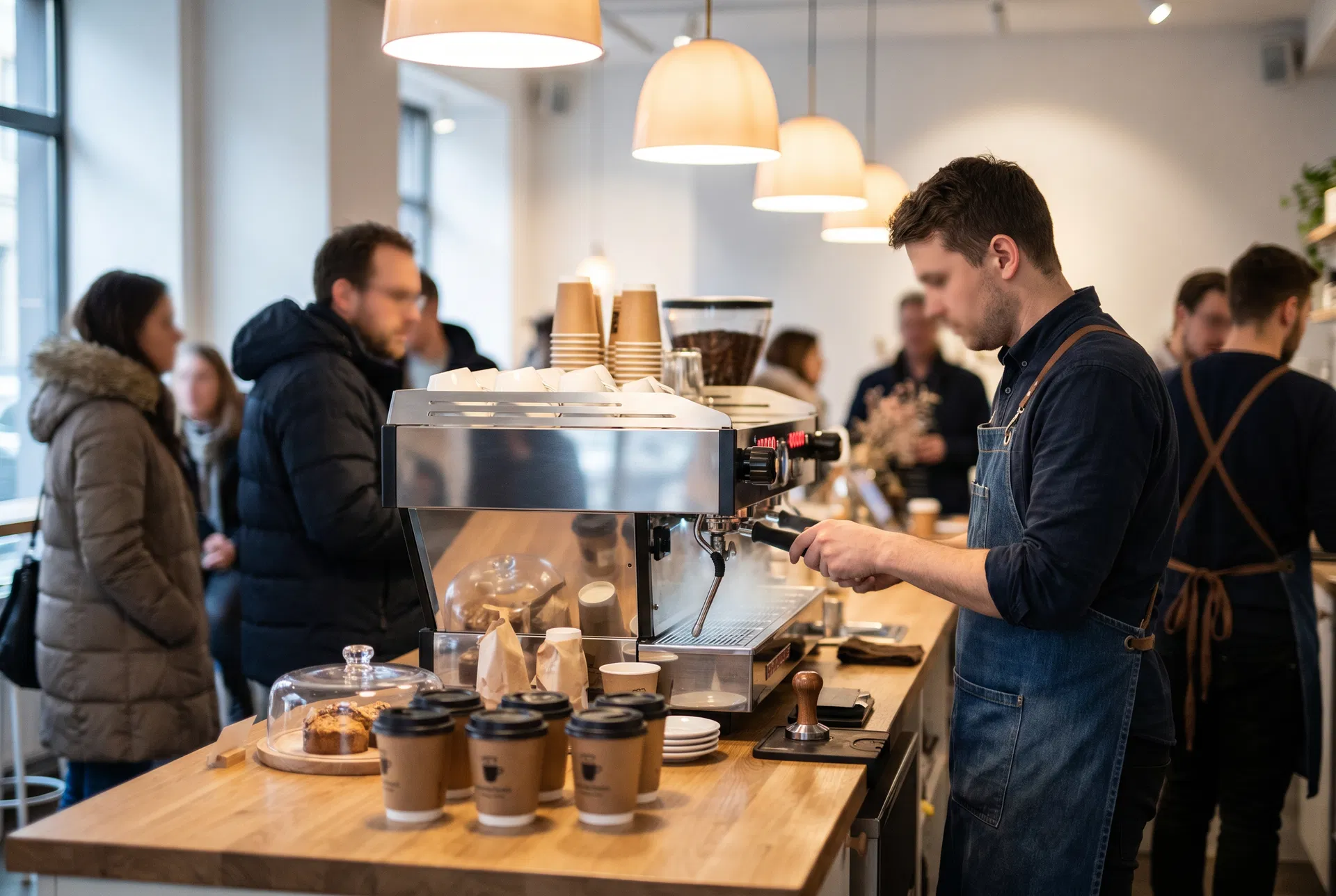
The right way to de-risk all three is boring and effective: request free samples and run your real drinks through them, using the hottest drink, longest realistic hold time, and actual lids. We ship sample packs in 7 to 10 business days precisely so buyers can do this before committing to 20,000+ units.
How to test aqueous samples properly (10-minute protocol)
Most sample testing we see is a sip of lukewarm water and a nod. That tells you nothing. Here’s the protocol we suggest to buyers switching a real drinks program: it takes ten minutes per cup type and catches 90% of future complaints:
- Hottest drink test. Fill with your hottest menu item at serving temperature. Lid on. Hold 30 minutes, longer than your real service window. Check the base and seam for softening or seepage.
- Condensation test (cold drinks). Fill with ice and your most acidic cold drink (citrus juice is the stress case). Leave 60 minutes at room temperature. Check outer wall integrity where condensation pools at the base.
- The overnight abuse test. Not because customers should do this, but because some will: leave one filled cup overnight. You want to know what “failure” looks like before a customer photographs it.
- Lid fit under squeeze. Carry a lidded cup across the room gripping it as a rushed customer would. Barrier performance is irrelevant if the rim deforms and the lid pops.
- Write down the production date from the carton, and note it against the 12 to 18 month window, then set your reorder quantities so stock turns over well inside it.
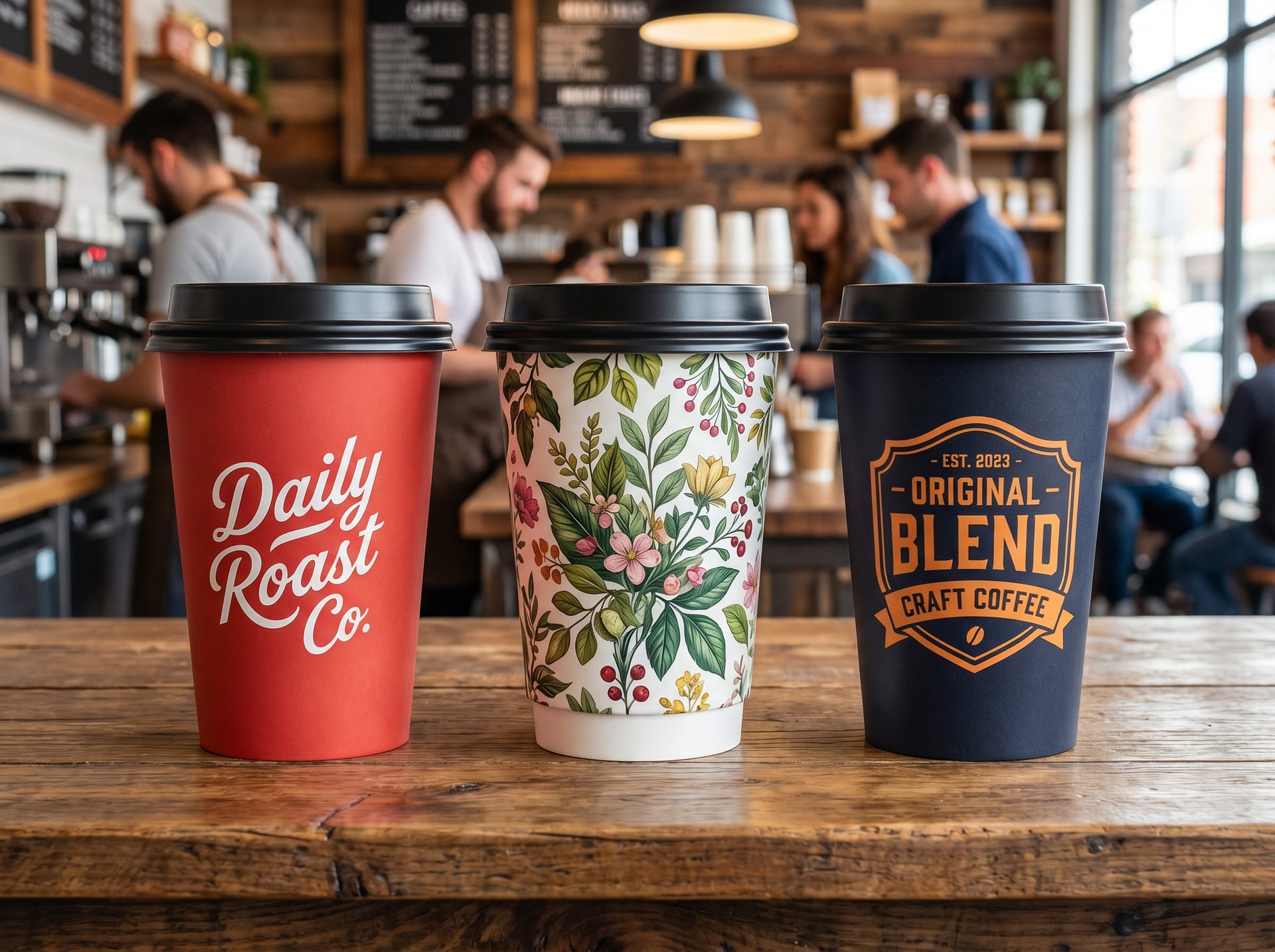
If a cup passes all five with your actual products, the coating question is settled for your use case: no datasheet required.
What about lids? Keeping the claim consistent
A film-free cup under a polystyrene lid is a mixed message, and in some markets, a labelling problem. Pair aqueous cups with:
- Paper lids: the consistent choice for a fibre-based serve; our cup lids range includes paper options for standard rim sizes
- rPET lids: recycled plastic, honest positioning (“recyclable cup, recycled lid”), better splash performance for delivery
- What to avoid: PS lids on an eco-positioned cup. The unit price saving is pennies; the brand inconsistency is visible to every customer who reads the lid stamp.
The same logic extends to sleeves and carriers: kraft fibre accessories keep the whole serve compostable-bin-adjacent and photograph well for marketing.
Aqueous vs PE vs PLA at a glance
| Aqueous | PE | PLA | |
|---|---|---|---|
| Barrier type | Water-based dispersion, no film, <5% polymer | Plastic (LDPE) film | Bioplastic (plant-based) film |
| Recyclable in paper streams | Yes (most markets) | No | No |
| Industrially compostable | No | No | Yes (EN 13432 / ASTM D6400) |
| PFAS-free | Yes (reputable formulations) | Yes | Yes |
| ”Plastic-free” claim | No (“no plastic film” is the defensible wording) | No | No (it’s still a polymer film) |
| Relative cost | Medium | Lowest | Medium-high (+8-15% vs PE) |
| Hot drinks | Yes, normal service times | Yes | CPLA needed above 55°C |
| Shelf life note | Use within 12-18 months | Long | Long |
The full three-way breakdown, including which markets accept each and how to choose, is in our PE vs PLA vs aqueous comparison.
Which markets is aqueous coating right for?
The blunt answer: aqueous wins where paper recycling infrastructure is strong and plastic-reduction rules are tightening.
- Germany, Scandinavia, the Netherlands, the UK: mature paper recycling streams, aggressive single-use plastic legislation, and consumers who check claims. This is aqueous coating’s home turf.
- EU generally: one thing aqueous does not change: the SUP marking. Because the dispersion still contains some polymer, aqueous cups carry the same Single-Use Plastics “turtle” label as PE cups, so plan your artwork around it. What aqueous does change is the recycling story, and in several markets the packaging-fee rate for paper-recyclable board.
- US and Canada: growing, city by city. Where composting infrastructure exists (California, Seattle), PLA competes strongly; where paper recycling dominates, aqueous is the more honest claim.
- Markets with weak collection systems: the environmental benefit shrinks if cups go to landfill either way. There, PE remains the pragmatic choice and your money is better spent elsewhere in the supply chain.
For a deeper look at coating options by material, our coating guide hub breaks down every option we run, including aqueous-coated cups specifically.
Does aqueous coating change printing or pricing?
Printing: no practical difference for buyers. Aqueous-coated board takes flexographic printing (up to 7 colors) and Pantone matching the same way PE board does; ink adhesion is verified during pre-production sampling like any other run. If you’re planning artwork, our printing guide applies unchanged.
Pricing: expect aqueous to land between PE and PLA, noticeably above PE, usually at or slightly below PLA depending on volume. MOQ for aqueous-coated paper cups is the same as our standard lines: from 20,000 pcs per size, with production in 25 to 30 business days after approval.
This guide stops at understanding the coating. If you have already decided aqueous is the right barrier and you are now working out whether to move an existing PE program onto it, that is a different question with different numbers: the real cost delta, which claims survive legal review, what changes at the print station, and the five cases where staying on PE is the better call. All of it is in the switching guide for aqueous coated paper cups.
Buyer’s checklist: ordering aqueous-coated cups
Copy this into your next supplier email:
- Confirm in writing: aqueous dispersion coating with stated polymer content (typically <5%)
- Which repulpability test report or recyclability result (CEPI/4evergreen) can you provide?
- FDA / LFGB food-contact documentation for the coated board
- Recommended maximum hold time for hot drinks in your formulation
- Production date coding, so we can manage the 12 to 18 month use window
- Free samples first: we’ll test with our actual drinks and lids
Frequently Asked Questions
Is aqueous coating the same as PLA?
No. PLA is a plant-based plastic film laminated to the board; aqueous is a water-based coating with no film at all. PLA is the choice for compostability claims (EN 13432); aqueous is the choice for recyclability and low-plastic claims.
Can aqueous-coated cups hold hot coffee?
Yes, for normal drink-and-go service. Quality aqueous formulations handle hot coffee and tea comfortably for typical consumption times. For extended hold times or very hot, high-fat liquids, test samples with your real product first.
Are aqueous-coated cups more expensive than regular PE cups?
Yes, the coating costs more than PE, typically landing near PLA pricing. Many buyers offset part of the difference through waste-fee savings and the marketing value of a verifiable film-free, paper-recyclable claim.
Why do aqueous cups have a shelf life?
The water-based barrier gradually loses effectiveness in storage. Use cups within 12 to 18 months of production and rotate stock first-in-first-out. Your supplier should be able to show production date coding on cartons.
What certifications should aqueous-coated cups come with?
Three documents cover you: a written coating specification stating the dispersion’s polymer content, a repulpability or recyclability test report (mill repulpability tests, CEPI/4evergreen results), and independent food-contact test reports. On that last one, ask what was actually tested: a serious aqueous program carries lab results (ours run through Eurofins) for overall and gas-phase migration, heavy metals, BPA and phthalates, antimicrobial transfer, and odour/taste sensory panels, across both single and double coating builds. A supplier who can’t produce all three within a day or two is reselling someone else’s board.
Does aqueous coating change how the drink tastes?
No, and it’s verified, not assumed. Sensory odour and taste panels are part of the independent lab battery on aqueous-coated board, and passing means no perceptible transfer to the beverage. For delicate drinks such as specialty coffee and teas, run your own taste test on free samples; the lab result and your barista should agree.
Can I put a “plastic-free” logo on an aqueous cup?
Generally no, and a supplier who encourages it is handing you a future problem. The dispersion still contains a small amount of polymer (typically under 5% of cup weight), so an absolute plastic-free logo is challengeable, and in the EU the cup still carries the Single-Use Plastics “turtle” marking. The claims that hold: “no plastic film”, “recyclable with paper” backed by repulpability tests, and PFAS-free by test report. Check the labelling rules for each market before printing any claim on the cup itself.
Thinking about switching away from plastic-film cups? Request a free sample pack of aqueous-coated cups and test them with your own drinks. Samples ship in 7 to 10 business days, you only cover shipping.
Ready to Source Eco-Friendly Paper Cups?
Request a free sample pack or get a wholesale quote tailored to your requirements.