
Henry — Head of Marketing · Reviewed by Austin, Product Manager
July 8, 2026 · 9 min read · Updated August 13, 2026
Custom paper cup printing comes down to three methods: flexographic for volume orders (up to 7 colors, best at 20,000+ cups), offset for photo-quality detail, and digital for small runs and proofs. Which one you should use depends on three numbers: your order quantity, your color count, and your budget per cup.
This guide covers all three, plus the artwork rules, color matching, and cost traps we see from inside the factory every week.
Which printing method should you choose?
The short answer: flexo for volume, offset for detail, digital for small runs. Printing on paper cups happens on a curved, coated surface rather than a flat sheet, which is why the three methods pull apart so sharply here. Here is how they actually differ on the production line.
| Flexographic | Offset | Digital | |
|---|---|---|---|
| How it works | Flexible rubber plates + fast-drying inks on a rotary press | CMYK process printing via plates and blankets | Inkjet/toner, no plates at all |
| Color capability | Up to 7 spot colors, full-wrap 360° | CMYK (4-color) + extra Pantone spots | Full color, no limit |
| Pantone matching | Yes, spot color matching | Yes, spot colors on top of CMYK | Close, but may vary slightly from bulk |
| Photo-quality images | No, solid colors and simple gradients only | Yes | Yes |
| Setup cost | Plate per color (fixed cost) | Plates + setup | None |
| Best at | 20,000+ cups per design | Premium runs, PP cups, complex art | Samples, proofs, sub-MOQ runs |
Flexographic: the industry standard
Flexo is what prints the cup in your hand at almost every coffee chain. A flexible rubber plate is made for each color in your design, mounted on a rotary press, and run with fast-drying inks. The result is consistent, bright print across millions of units.
The catch is the plates. Every color means another plate, and plates are a fixed cost whether you print 20,000 cups or 500,000. That’s why a 7-color design makes no sense on a minimum-quantity run: the plate cost per cup eats your margin. Across hundreds of client print jobs, most branded cups run 2 to 4 colors, and they look great.
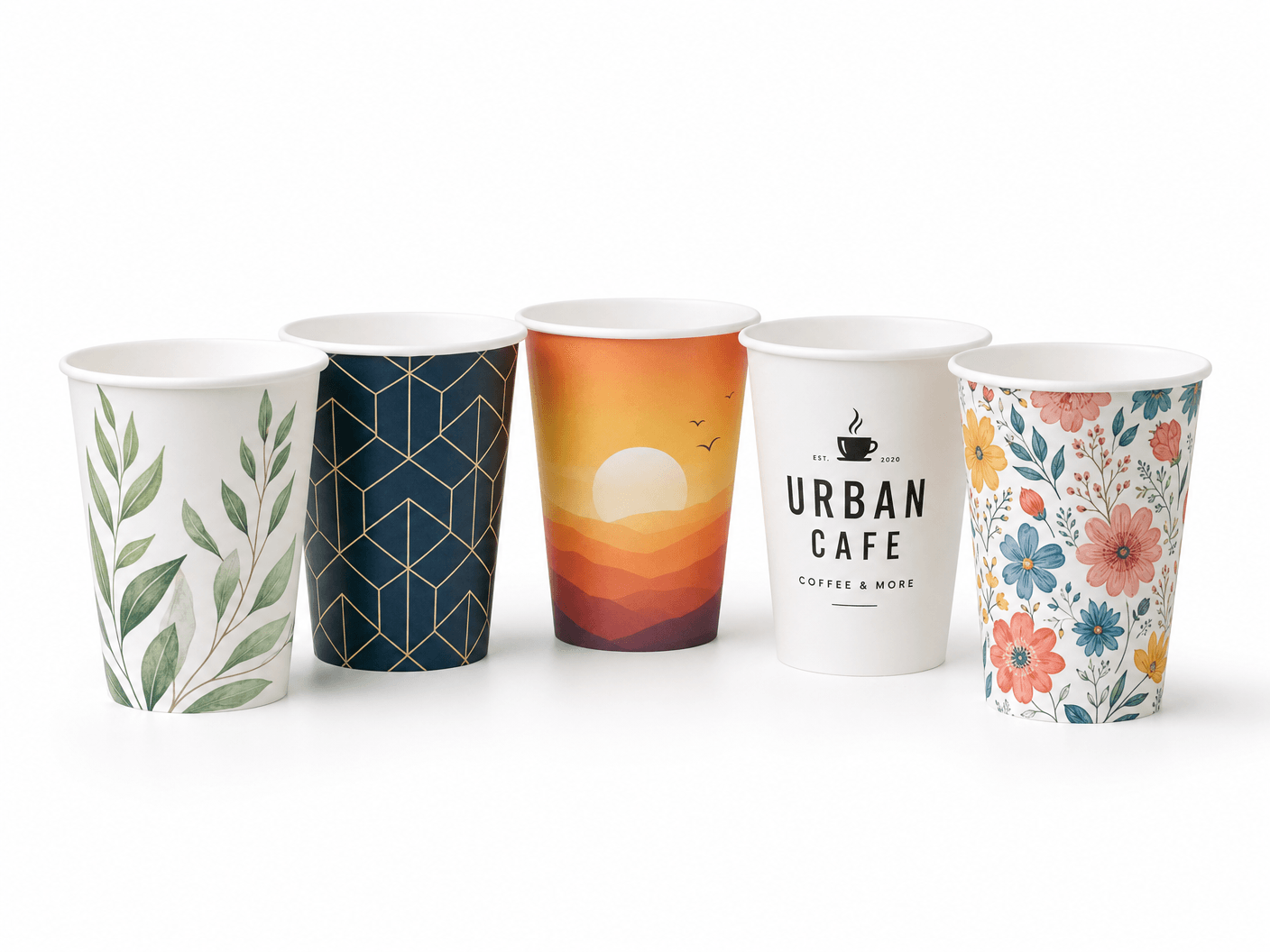
Verdict: if you’re ordering 20,000+ cups with a logo-based design, flexo wins. Full stop.
Offset: for photo-real detail
Offset printing builds your image from CMYK dots, like a magazine page, and can add Pantone spot colors on top for exact brand colors. It’s how we print photographic artwork and fine gradients, especially on PP injection cups, where offset and IML (in-mould labelling) are standard.
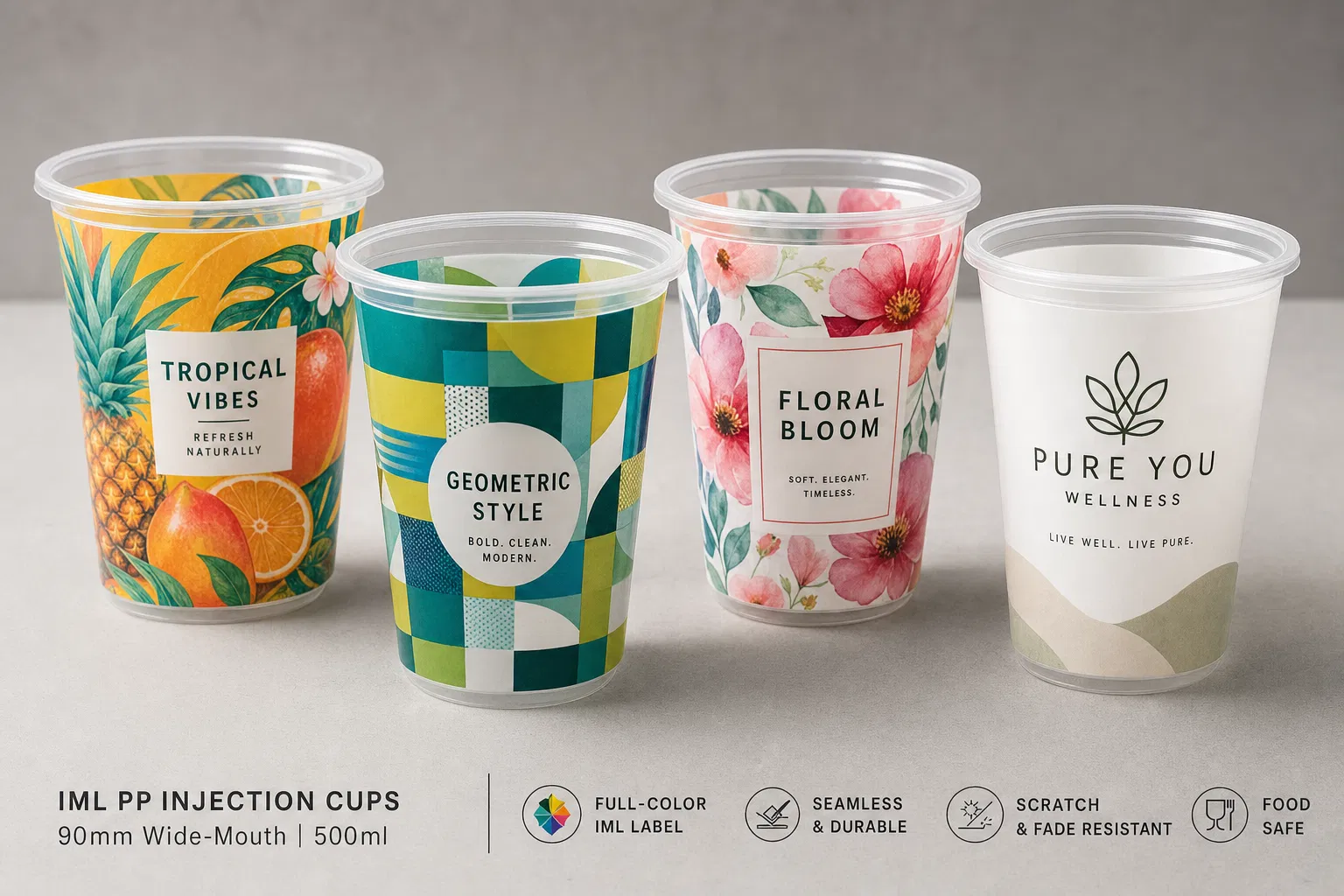
It costs more per cup than flexo. Choose it when your design genuinely needs it: photos, skin tones, fine texture. A two-color logo printed offset is money wasted.
Verdict: pick offset only when your artwork has photographic detail flexo can’t hold.
Digital: no plates, no MOQ pressure
Digital printing skips plates entirely, which removes the setup cost and, with it, the volume logic. It’s how factories produce pre-production proofs and small custom runs.
One honest warning from the print room: digital proof colors are close to bulk production, but not identical. Ink chemistry and substrate behavior differ between a digital proof and a flexo bulk run. That’s exactly why the physical sample step exists (more on that below).
Verdict: digital is for sampling and sub-MOQ runs. At volume, it can’t compete with flexo on unit price.
What files does the factory actually need?
Send vector artwork (AI, PDF, or EPS) at 300 DPI minimum, with all fonts outlined and colors specified in Pantone or CMYK. High-resolution PNG/JPEG is workable for photographic elements, but your logo and text should always be vector.
Here’s the insider truth: about one in four artwork files we receive has the same two problems: fonts that aren’t outlined, and logos pulled off a website at 72 DPI. Each one costs you a round of email back-and-forth, and at a 12-hour time zone gap, every round is a lost day.
The dieline below is drawn from a 12 oz single wall cup.
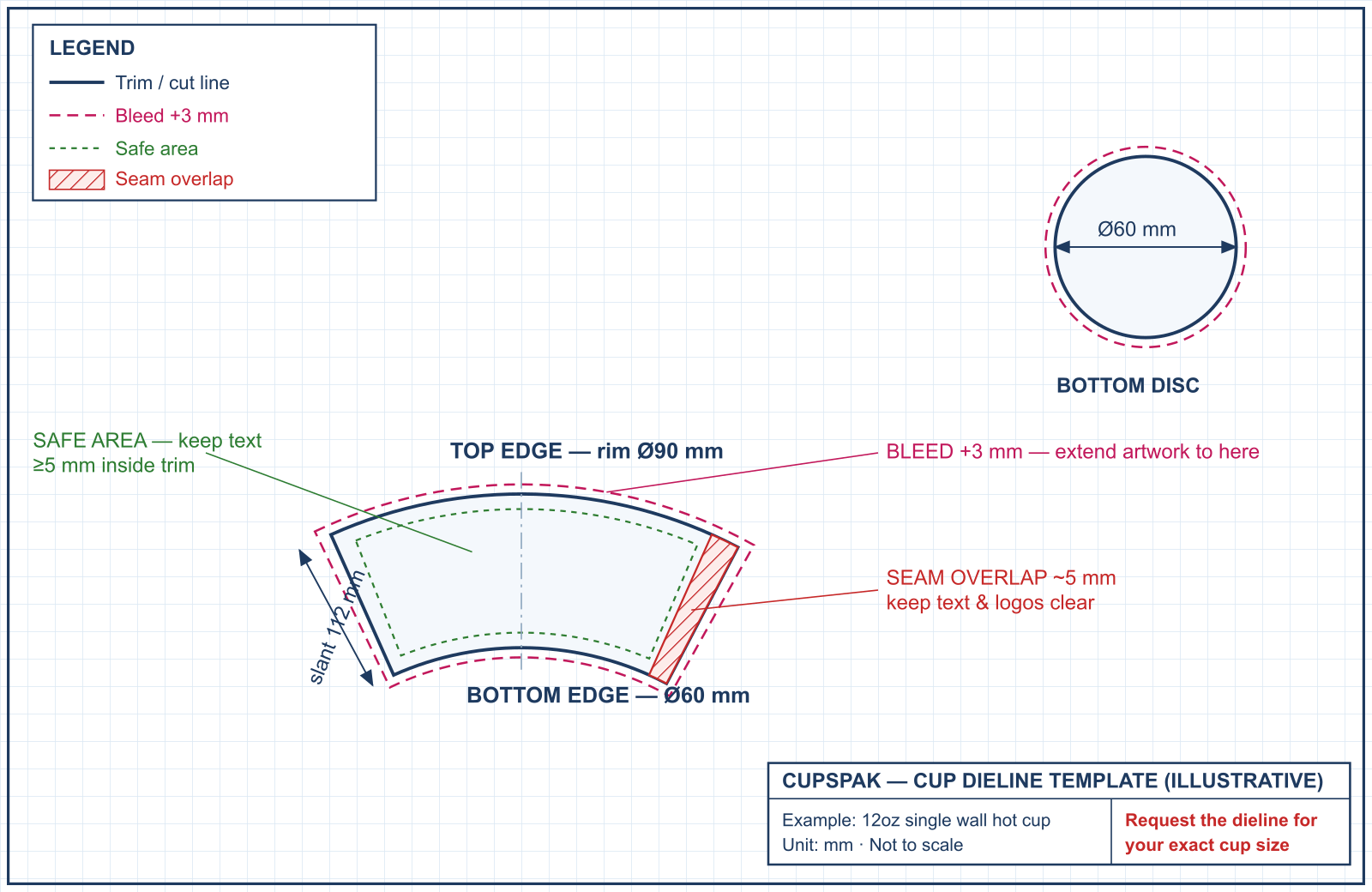
This is what a cup dieline looks like: a fan-shaped blank, not a rectangle. The solid line is where the cutter runs, the dashed outer line is your 3mm bleed, and the hatched strip is the seam your artwork must stay clear of. Dimensions change with every cup size, so always design on the template for your exact cup.
Run this pre-flight check before you hit send:
- Fonts outlined (converted to curves): otherwise the factory’s computer substitutes its own fonts and your brand typography silently changes
- 300 DPI or higher at actual print size: screen images at 72 DPI print as a blurry stamp
- Colors in Pantone or CMYK, never RGB: RGB is a screen color space; the press can’t reproduce it predictably
- Artwork on the supplier’s dieline: a paper cup is printed flat as a fan-shaped blank, not as a cylinder; ask your supplier for the dieline template for your exact cup size
- 3mm bleed beyond the trim line, and keep text at least 5mm inside the seam area: the vertical seam overlaps, and art placed there gets swallowed
- One PDF proof of intent: a flat mockup showing how the design should wrap, so nothing is open to interpretation
If your file isn’t print-ready, don’t panic. Our design team fixes dielines, outlines fonts, and preps files at no extra charge, but a clean file still saves you 2 to 3 days.
How color matching really works
If your brand color must be exact, specify it as a Pantone number, and ask for Pantone spot matching in writing. We offer Pantone matching on flexographic and offset runs.
Two things buyers consistently underestimate:
Your screen lies to you. The design that glows on a backlit monitor prints differently on paperboard, because paper reflects light instead of emitting it. This is normal physics, not a factory error, and it’s why approving colors from a PDF alone is a gamble.
The board color shifts everything. The same ink prints brighter on white board and warmer and darker on kraft (brown) board. If you’re printing on kraft (popular for the natural eco look), expect muted tones, and avoid light pastels that disappear into the brown. White ink underprint is possible but adds a color station.
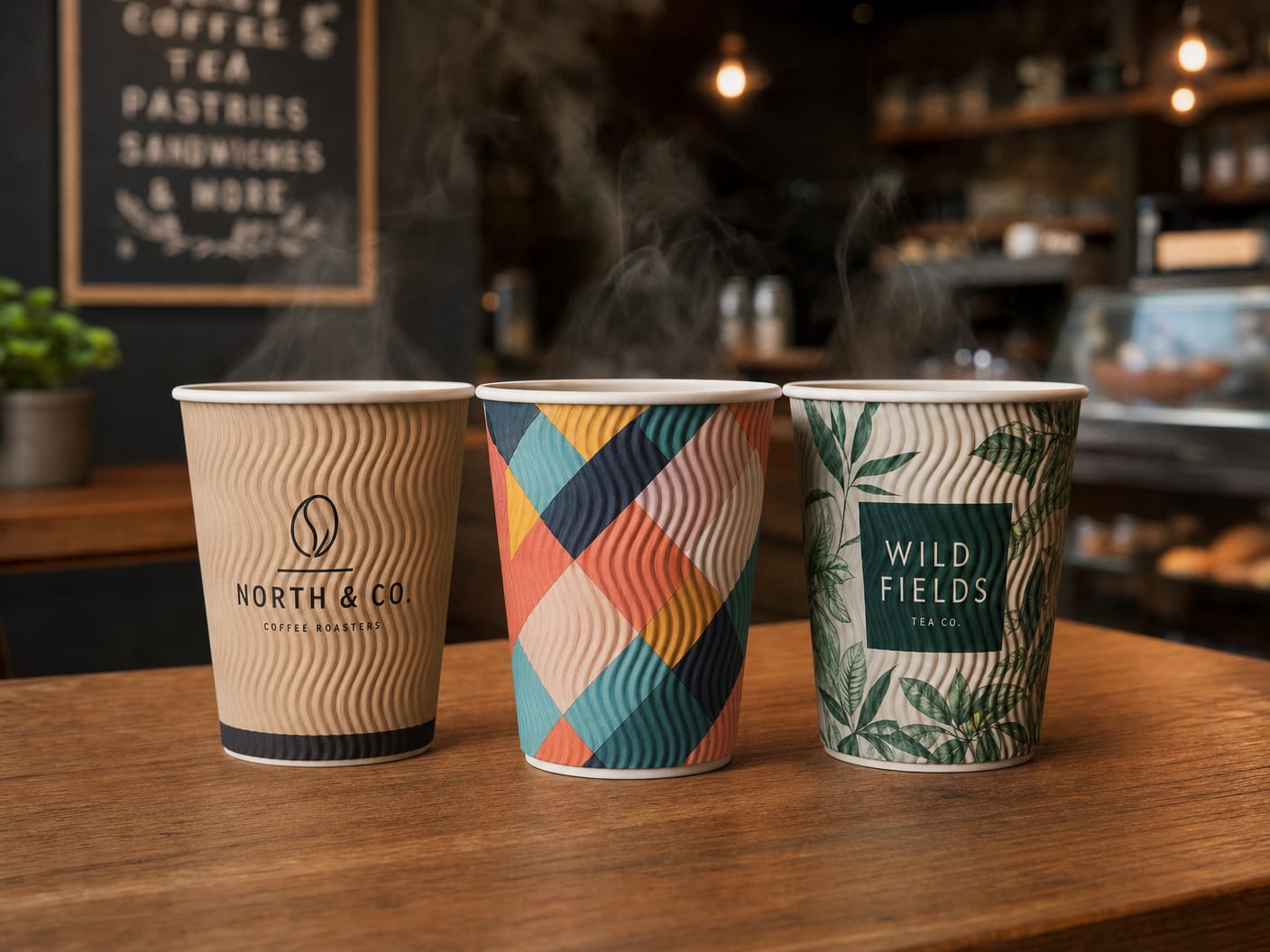
One more variable: the coating. PE, PLA, and aqueous coatings each interact slightly differently with ink adhesion and gloss. If you’re choosing a coating for sustainability reasons, read our coating comparison first, then confirm with your supplier that your artwork works on that coating. A good factory will tell you before production, not after.
What does custom printing cost?
For paper cups, custom printing starts at MOQ 20,000 pcs per size (also 20,000 for cup sleeves; 10,000 for bags and lids), and the unit price depends mostly on three drivers you control:
- Color count. Each flexo color adds a plate and a print station. Dropping a 5-color design to 3 colors is often invisible to customers and meaningfully cheaper per cup.
- Coverage. Full-wrap 360° coverage uses more ink than a single logo placement. Heavy solid-ink floods also slow the press.
- Quantity per size. Plates amortize across the run: the same design at 100,000 cups costs far less per cup than at 20,000. If you run three cup sizes, note that MOQ applies per size: three sizes means three runs.
What suppliers don’t always tell you: a quote that looks 20% below market usually isn’t printing magic. That money comes out of somewhere: thinner paperboard (check the GSM), fewer QC checks, or “close enough” color matching. Ask any suspiciously cheap supplier to confirm board weight, ink type, and Pantone matching in writing, and watch the price quietly correct itself.
For the full ordering process (payment terms, shipping, and what to check before you pay), see our step-by-step ordering guide.
The proofing process: never skip the physical sample
The proofing sequence at a properly run factory looks like this:
- Free digital proof. Your artwork placed on the dieline, showing exact wrap, seam position, and colors. Approve or request changes: unlimited rounds cost you nothing but time.
- Physical pre-production sample. A real cup, printed with your artwork, in your hands in roughly 7 to 10 business days. This is where you check true color against your Pantone book, seam alignment, and ink coverage.
- Bulk production. 25 to 30 business days after your sample approval and deposit.
My advice: never approve bulk production from step 1 alone. The digital proof confirms layout; only the physical sample confirms color. Off-brand color across a whole shipment is rare, but we have seen it happen when the sample step gets skipped, and it’s an expensive way to save a week. If you already have a reference cup or a printed sample in your brand colors, send it to us: we match production color against your original sample, not just against a screen.
While you wait for the sample, ask for the compliance paperwork too: FDA or LFGB food-contact documentation, and EN 13432 certificates if you’re running compostable cups. A factory that prints well but can’t produce certifications on request is a risk you don’t need.
Quality checks worth asking about
You don’t need to become a print engineer, but three defects cover most of what goes wrong. Ask your supplier how they check for each:
- Registration errors: when multi-color designs are printed, each color must land in exactly the right position; misregistration shows as halos or color fringes at the edges of your logo
- Ink adhesion: properly cured ink doesn’t scratch off with a fingernail or transfer onto a sleeve; there’s a standard tape test for this
- Batch color drift: your 3rd reorder should match your 1st; this is what Pantone standards and retained production samples are for
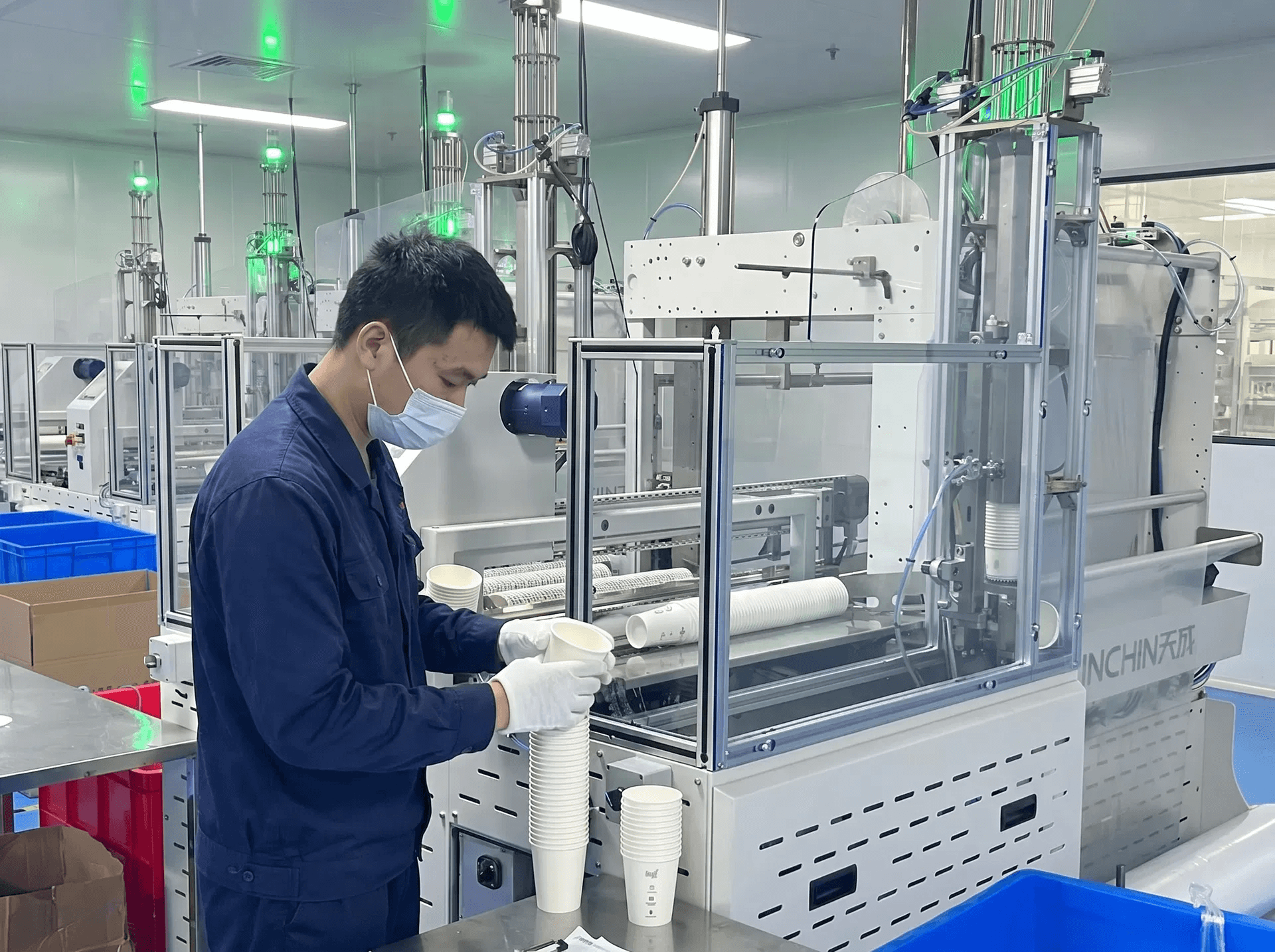
At CupsPak, every order goes through in-process inspection and a final pre-shipment check under ISO 9001: you can read how our quality control works, but honestly, ask these questions of any supplier, including us.
Copy-paste checklist: questions to ask your printing supplier
Before you commit to a custom print run, send your supplier this list:
- Which printing method will my order use: flexo, offset, or digital?
- How many colors does my design need, and what does one fewer color save?
- Can you send me the dieline template for my cup size?
- Do you offer Pantone spot matching, and will you confirm my Pantone numbers in writing?
- Is the pre-production sample physical or digital-only? How many days?
- What is the MOQ per size, and the lead time after sample approval?
- What paperboard GSM will you use, and which coating (PE / PLA / aqueous)?
- Can you provide FDA or LFGB food-contact documents with the shipment?
If a supplier answers all eight clearly and in writing, you’ve found someone who actually knows the product. If the answers get vague around GSM and Pantone, keep looking, and our guide on ordering from China covers what else to check before you pay.
Frequently Asked Questions
Can I print a full-color photo on a paper cup?
Yes, but only with offset or digital printing. Flexographic printing builds designs from solid spot colors, so a photograph will lose its detail. If your artwork is photographic, tell your supplier up front so they quote the right method.
What is the minimum order for custom printed paper cups?
Custom print MOQ is typically 20,000 pcs per size for paper cups, and 20,000 per design for cup sleeves (paper bags and lids start at 10,000). Below that quantity, digital printing or stock cups with sleeves are the realistic options.
How long does custom paper cup printing take?
Plan for 7 to 10 business days for the physical pre-production sample, then 25 to 30 business days for bulk production after approval and deposit. Add shipping time for your route. Rush production is available: ask before you order, not after.
Will my printed colors match my brand guidelines exactly?
With Pantone spot matching on flexo or offset runs, yes, within normal tolerance. Approve a physical sample against your Pantone book rather than a screen. Note that kraft board and coating choice both shift how colors appear.
Can the factory fix my artwork if it’s not print-ready?
A good supplier will. CupsPak’s design team outlines fonts, rebuilds low-resolution logos where possible, and places artwork on the correct dieline at no extra charge. You’ll still approve the final proof before anything prints.
Ready to see your design on a real cup? Send us your artwork for a free print-readiness check, or request a free sample pack to feel the print quality first. No obligation, you only cover shipping.
Ready to Source Eco-Friendly Paper Cups?
Request a free sample pack or get a wholesale quote tailored to your requirements.